


DATE
April 8, 2025
CATEGORY
Personality of the Month
SHARE


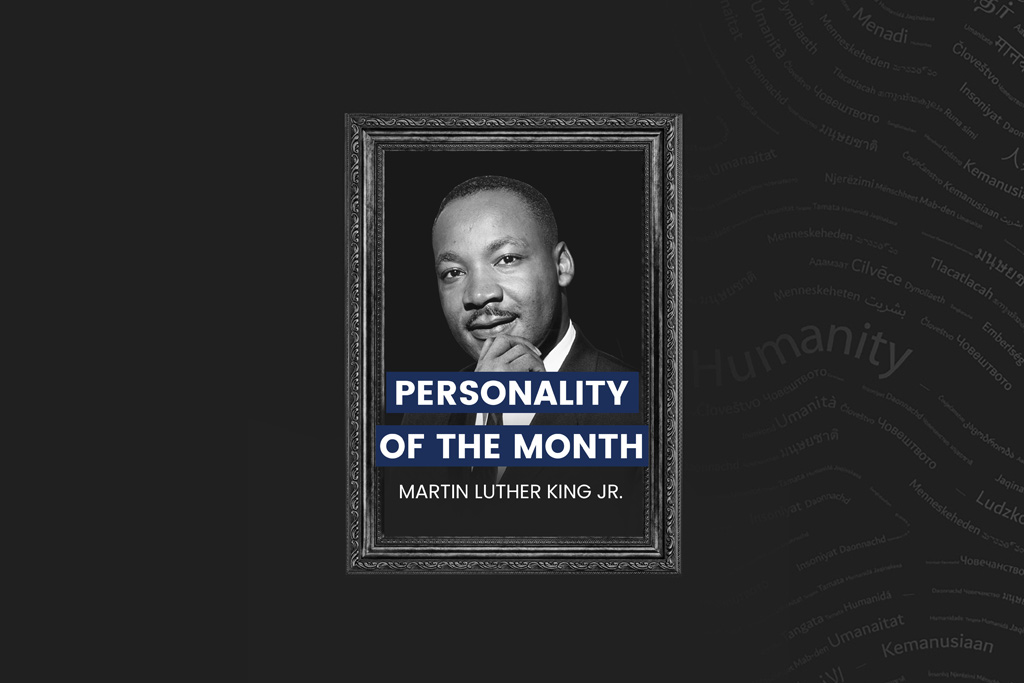
“I look to a day when people will not be judged by the color of their skin, but by the content of their character.” – Martin Luther King Jr.
Dr. Martin Luther King, Jr. devoted his life to challenging racial inequality and was a steadfast leader in the civil rights movement. Born in Atlanta in 1929, King came of age during a time when segregation was deeply entrenched, particularly in the South. Faced with the systemic discrimination of the era, King was motivated from a young age to pursue justice and equality for all. He believed that peaceful resistance was the most powerful tool for dismantling racial injustice.
In 1944, at just 15, King enrolled at Morehouse College through a special wartime initiative. That summer, he worked on a tobacco farm in Connecticut, marking his first real exposure to a less segregated society. He was astounded by the integration he witnessed, where Black and white people mingled freely, which fuelled his growing desire to challenge segregation.
King’s rise as a key figure in the civil rights movement began after Rosa Parks’ arrest in 1955 for refusing to give up her seat to a white passenger on a Montgomery bus. This sparked a year-long bus boycott, with King emerging as the leader of the protest. In 1956, the U.S. Supreme Court ruled segregated bus seating unconstitutional. By then, King had become a prominent advocate for nonviolent protest, drawing inspiration from Mahatma Gandhi and civil rights leader Bayard Rustin.
In April 1963, King was arrested for his involvement in the Birmingham protests. During his time in jail, he penned his powerful “Letter from Birmingham Jail,” defending his philosophy of civil disobedience in response to criticism from local clergymen.
The momentum of the civil rights movement reached a high point in 1963 with the March on Washington, where over 200,000 people gathered to demand equality and justice. King’s “I Have a Dream” speech at the Lincoln Memorial became a symbol of hope and unity for the movement, inspiring countless individuals to continue the fight for racial justice.
The movement achieved a major victory in 1964 with the passage of the Civil Rights Act, which prohibited discrimination in public accommodations and employment. Later that year, King received the Nobel Peace Prize, accepting it with a profound belief in humanity’s ability to reach moral progress despite current societal flaws.
By 1967, King expanded his focus, speaking out against the Vietnam War. At Riverside Church in New York, he firmly declared his opposition to the war, despite facing backlash from both the government and segments of the Black community.
Tragically, on April 4, 1968, while in Memphis supporting striking sanitation workers, King was assassinated. His death left an indelible mark on the fight for equality in America.
In recognition of his legacy, Martin Luther King, Jr. Day was established as a federal holiday in 1983, serving as a time to honor his contributions to civil rights and continue his work toward justice for all.
References:
https://www.nobelprize.org/prizes/peace/1964/king/biographical/
https://en.wikipedia.org/wiki/Martin_Luther_King_Jr.
https://www.britannica.com/event/American-civil-rights-movement
https://www.history.com/topics/black-history/martin-luther-king-jr#montgomery-bus-boycott