Under the patronage of His Highness Sheikh Mohammed bin Rashid Al Maktoum, Vice President, Prime Minister of United Arab Emirates, Ruler of Dubai
Logo
24 – 26 August 2026

Dubai World Trade Centre

Twitter
  • About Us
    • About DIHAD Event
    • Chairman’s Message
    • DISAB
    • Event Summary
    • Why Attend
    • Event Testimonials
    • Waterfalls Initiative
    • FAQ’s
  • Conference
    • Concept Note
    • Conference Program
    • Conference Speakers
    • Executive Humanitarian Programme
    • EHP Concept Note
    • 2025 Executive Summary
    • Past Conference Archives
  • Exhibition
    • Exhibitors List
    • Exhibitor Products
    • Official Service Providers
    • Exhibitor Profile
    • Visitor Profile
    • Why Exhibit
    • Book Exhibition Space
    • 2026 DIHAD Workshops
    • 2025 Post Show Report
    • 2025 IECM Workshops
  • Registration
  • Partnership Hub
  • Media
    • Image Gallery
    • Video Gallery
    • News & Press Releases
    • Media Clips
    • Online Coverage
    • Humanity without borders
    • Media Contact
  • Plan Your Trip
    • Accommodation
    • Flights
    • Visa Application
    • Activities
  • Contact Us
    • Contact – Exhibiting
    • Contact – Registration
    • DIHAD Cares
24 – 26 August 2026

Dubai World Trade Centre

Quick Links  
Quick Links
  • Why Exhibit
  • Exhibition and Sponsorship
  • Why Attend
  • Registration
  • 2025 Post Show Report
  • About
    • About DIHAD Organisation
    • Chairman’s Message
    • Board of Trustees
    • DISAB
  • Pillars
    • DIHAD Conference & Exhibition
    • DIHAD Humanitarian College
  • Awards
  • Media Center
    • DIHAD News
    • Articles
  • Contact Us
×
  • About
    • About DIHAD Organisation
    • Chairman’s Message
    • Board of Trustees
    • DISAB
    • Partners
  • Pillars
    • DIHAD Conference & Exhibition
    • DIHAD Humanitarian College
    • DIHAD Sustainable Humanitarian Foundation
  • Awards
  • Media Center
    • DIHAD News
    • Articles
  • Contact Us

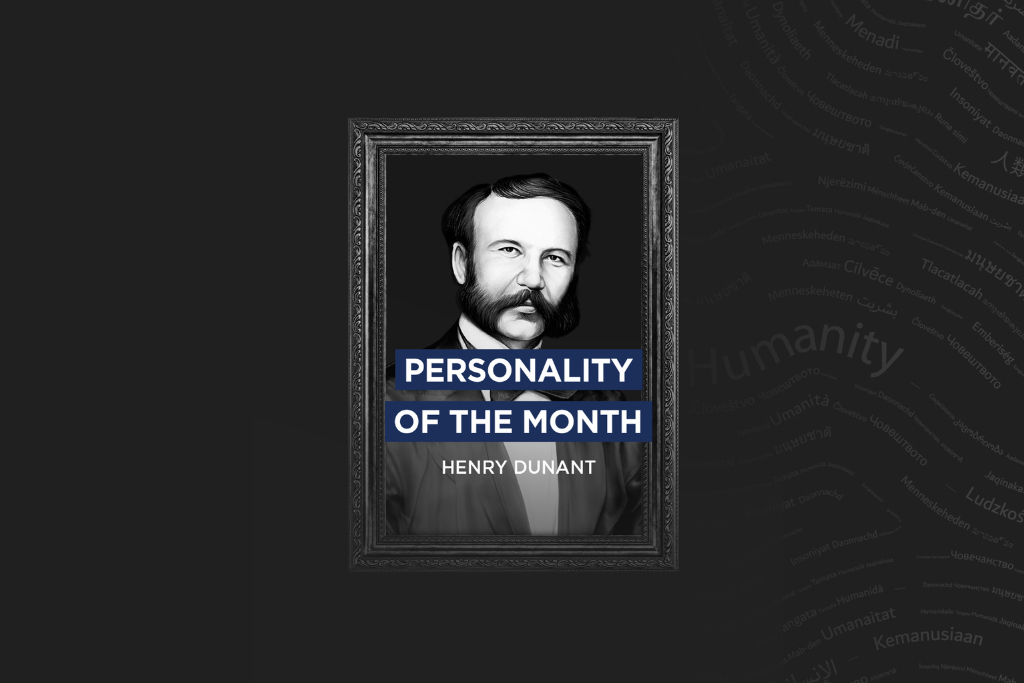
The Legacy of Henry Dunant Lives on Through Humanitarian Efforts

October 25, 2024 by dihind17

Related Posts

Clara Barton: The Founder of the American Red Cross

July 2, 2026

Kofi Annan: A Life of Diplomacy and Global Leadership

May 18, 2026

The Life Journey of Mother Teresa: Global Humanitarian

September 1, 2025

Martin Luther King Jr.: A Dream of Justice, A Legacy of Change

April 8, 2025

Nelson Mandela: A Legacy of Courage, Resilience, and Humanity

February 28, 2025

DATE
October 25, 2024
CATEGORY
Personality of the Month
SHARE
linkedin twitter facebook

Henry Dunant

Henry Dunant, born in 1828 was a humanitarian, businessman, social activist, and co-founder of the Red Cross. His humanitarian efforts won him the first ever Nobel Peace Prize in 1901.

Humanitarian Work

Dunant always knew the importance of helping others in need. He had observed his parents help the sick, poor, orphans, and prison parolees. At age 18, following his parents’ example, Dunant joined the Geneva Society for Alms Giving, through which he volunteered time to care for the poor and sick.

Dunant became a member of the Geneva Organisation known as the “League of Alms” whose main purpose was to provide spiritual and material assistance to the poor and sick.

Dunant frequently visited Geneva Jails where he tried to rehabilitate and reintegrate prisoners.

Inspiration behind the founding of the Red Cross:

Dunant took a trip that would change his life.

In 1859, Dunant visited Emperor Napoleon III for business reasons, so he traveled to northern Italy where a military campaign was taking place. Henry witnessed firsthand the tragedy and horrors of war when he toured the area after the Battle of Solferino which was known as a particularly a slaughter for both sides.  The battle had such an impact on Dunant where he returned to Geneva and wrote a book titled A Memory of Solferino describing what he had seen and published it at his own expense.

Dunant himself took the initiative to organize the civilian population, especially the women and girls, to aid the injured and sick soldiers. They lacked sufficient materials and supplies, and Dunant himself organized the purchase of needed materials and helped erect makeshift hospitals. He convinced the population to service the wounded without regard to their side in the conflict as per the slogan “Tutti fratelli” (All are brothers) coined by the women of nearby city Castiglione delle Stiviere. He also succeeded in gaining the release of Austrian doctors captured by the French and British.

Founding of the International Committee of the Red Cross

On February 7, 1863, the Société Genevoise d’utilité publique [Geneva Society for Public Welfare] appointed a committee of five, including Dunant which eventually founded the International Committee of the Red Cross.

On August 22, 1864, twelve nations signed an international treaty, commonly known as the Geneva Convention, agreeing to guarantee neutrality to sanitary personnel, to expedite supplies for their use, and to adopt a special identifying emblem – in virtually all instances a red cross on a field of white.

Dunant called for the creation of national relief societies to assist those wounded in war, paving the way for the future Geneva Conventions.

Dunant approved the efforts to extend the scope of the Red Cross to cover naval personnel in wartime, and in peacetime to alleviate the hardships caused by natural catastrophes.

In 1872 he convened a conference to establish the «Alliance universelle de l’ordre et de la civilisation» which was to consider the need for an international convention on the handling of prisoners of war and for the settling of international disputes by courts of arbitration rather than by war.

Dunant neglected his businesses and only concentrated his attention on humanitarian pursuits and neglecting his businesses.

Nice note to end on:

Dunant was awarded the first ever Nobel peace prize for his humanitarian efforts in 1901.

Passed away in 1910.

To conclude the story of Henry Dunant which is the official congratulations which Dunant received from the International Committee finally represented the rehabilitation of his reputation:

“There is no man who more deserves this honour, for it was you, forty years ago, who set on foot the international organization for the relief of the wounded on the battlefield. Without you, the Red Cross, the supreme humanitarian achievement of the nineteenth century would probably have never been undertaken.”

Dunant had not spent any of the prize monies he had received. He bequeathed some legacies to those who had cared for him in the village hospital, endowed a «free bed» that was to be available to the sick among the poorest people in the village, and left the remainder to philanthropic enterprises in Norway and Switzerland.

References:

https://www.ifrc.org/who-we-are/about-ifrc/our-history-and-archives

https://www.nobelprize.org/prizes/peace/1901/dunant/biographical/

https://www.youtube.com/watch?v=FK1xIwiBdWs

https://www.youtube.com/watch?v=byya7wC1niE

http://www.faqs.org/health/bios/1/Jean-Henri-Dunant.html

Filed Under: Personality of the Month

Head Office

INDEX Holding HQ, Road D-62 , Opposite
Nad Al Hamar, Dubai, UAE P.O. Box 13636

© 2026 DIHAD Sustainable Organisation

dihad.org
Organised By :
INDEX Conferences & Exhibitions Organization L.L.C
INDEX Conferences & Exhibitions Org. Est.

COPYRIGHT © 2026. ALL RIGHTS RESERVED. Privacy Policy

Shortage of ‘Human Resources for Health’ in Developing Countries

Supported by Noor Dubai

Subtitle:

The shortage of health workers in developing countries may undermine the attainment of the Sustainable development goals, universal health coverage and undermine control of epidemics/pandemics. So how do we improve the number and quality of health workers in developing countries?

Context:

The World Health Organization in its 2006 World Health Report reported that over 4 million more health workers are needed globally to prevent crisis in the health sector. Out of which Africa alone needs 1.5 million workers. Thus 36 of the 57 countries in the continent have critical shortages of human resources for health.

Globally all countries are challenged by worker shortage, skill mix imbalance, maldistribution, negative work environment, and weak knowledge base. However, it is worse in the poorest countries mostly of Africa and Asia where the workforce is under assault by HIV/AIDS, epidemics, out-migration, poor working environment, demotivation, undertraining and inadequate investment.

The critical shortage of health workers in developing world especially Africa is a major impediment to achievement of health/developmental goals, and could hinder the ability to control epidemics and pandemic outbreaks. In many developing countries this shortage not only affects provision of life saving interventions like childhood immunization, maternal services and prevention/treatment of the major infectious diseases –HIV, Malaria and Tuberculosis; but also hampers response to serious epidemics and pandemics like Ebola, Hemorrhagic fevers, Yellow fever and Covid-19. In addition to this the increasing aging population and change of life style in these developing countries results in rising burden of chronic diseases and non-communicable diseases like diabetes mellitus, hypertension, cancers etc needing more well trained health personnel’s and facilities.

This shortage is made worse within these countries by a vicious cycle of outbreaks of epidemics that further deplete the workforce and emigration of health workers to other parts of the world. The gross mal-distribution of the workers where by majority of health workers are in the urban areas but most of the population lives in rural areas in these countries, aggravates the situation. Furthermore the opportunities for continuous medical education and self-development is generally limited.

Thus, this human resource for health crisis in the developing countries especially Africa is not only about the quantity of the health workers and their distribution but also their quality. Due to weak educational systems and training facilities, occasioned by poor investment, health workers in many of these countries are not only inadequately trained but also lack the continuous medical education to handle emerging life threatening emergencies and chronic health conditions.

The crisis is partly caused by underfunding from governments due to competing developmental demands with very weak economies. This results in fewer ill-equipped training institutions, undertraining, under-recruitment, lack of facilities, demotivation, brain drain etc. The pull of higher salaries in industrialized countries and the push of poor working conditions at home along with political and social strife drive thousands of health workers to jobs abroad each year. This ever increasing brain drain from these poor weak countries to richer nations of the West and Middle East compound an already bad situation.

Challenge statement:

The SDG goal 3 (Ensuring health living and promoting wellbeing for all for all ages), the universal health coverage and ability to withstand epidemics and pandemics like Covid-19 cannot be achieved in many countries if the human resources for health crisis in these countries is not tackled.

So how can we address this gross shortage of health workers in developing countries especially Africa in terms of not only the number of the health workers, but their distribution and their expertise (knowledge and skills?). What innovative and technological approach can be applied to address this big challenge?

The digital literacy divide between e-learners: how to narrow the gaps?

Supported by Médecins Sans Frontières (MSF)

Title: The digital literacy divide between e-learners: how to narrow the gaps?

Concept: In a world that everyone is using the digital sphere to communicate and learn, there is still a gap between the e-learners as some have high digital literacy while many still have more limited literacy.

MSF’s e-Learning team (TEMO) aims at reaching 95% of the organization’s staff and not only 25% with high digital literacy, access to computers, access to internet, etc.

Challenge: In this scenario and in order for all staff to have access to distance learning and eLearning Solutions like Tembo can offer, what are proposals and ideas to promote digital literacy for the e-learners to narrow the gaps?

Overcoming Challenges to the Inclusion of Beneficiaries with Disabilities in Emergencies

Supported by International Humanitarian City

Keywords: Emergency Preparedness & Response; Disabilities

Introduction:
IHC for the 2020 Humanitarian Hackathon decided to focus the attention on a group of vulnerable populations affected by Disabilities. The purpose of this challenge is to stimulate people to think outside the box and come up with possible innovative tools that the humanitarian community can offer to people exposed to emergencies and having different kinds of disabilities. In particular, mobility and communication/ability to attract attention are two crucial factors when it comes to the immediate aftermath of a disaster as well as the short and long-term living situation the affected disabled population may find themselves in. The purpose is to integrate and enrich the humanitarian prepositioned stocks with appropriated equipment and aid and therefore strengthen the emergency preparedness and have tools ready for their use in the response phase. The aim is to involve the Humanitarian Hackathon 2020 participants and transform their ideas in humanitarian aid for the benefit of the disabled. Looking at the list of the humanitarian relief items stocked within various humanitarian hubs it appears that no specific items are kept in stock specifically to support the differently-abled living in areas affected by disasters.

Scenarios:
The most frequent emergency scenarios are due to natural disasters such as floods, Tsunamis, Earthquake, cyclones, volcano eruptions, fire-forest etc…in addition to conflict areas. Hackathon participants are invited to think about the disabled population in those scenarios, and particularly, how the disabled can attract rescue teams or humanitarian workers providing assistance. Options for innovative solutions may focus on preventive measures, especially for the populations most exposed to risks and living in prone and hazard areas and subject to frequent natural disasters. Other innovative solutions may focus more on the immediate response following disasters when the affected population is forced to vacate their accommodation, which is appropriately equipped for their disability and moved into newer and less familiar areas. How can we help them?

Below are some tips for the various potential disabilities.

Suggestions:

  • Overall, items that could be useful to most disability categories could be:
  • A Tools to attract attention (which can be distributed to all vulnerable people affected)
  • A disability-friendly app
  • Stool bags compatible with a foldable wheelchair toilet seat
  • Clear masks for lip-reading for the rescue teams
Improving Small Farmers Access to Knowledge About Crop Production Techniques through E-Agriculture

Supported by International Humanitarian City

In several humanitarian response areas, are blessed with diverse climatic conditions for almost all crops (cereal, fruit and vegetable crops), besides ample opportunity to grow high value vegetables as off season in certain zones and pristine climatic niches as well production of certain fruits and vegetables seedling in low, high and walk in tunnels.

Moreover, there is also immense scope of growing short duration vegetable in three successive seasons i.e. summer, winter and autumn such as tomato, broccoli and potato. The small farmers in general are neither aware of the opportunities of effective utilization of their physical , financial and human resources nor know the ways and means to utilize their available resources. Thus they follow the hit and trial rules to grow crops which often incur heavy losses to them.

DISTANCE LEARNING CHALLENGES IN DEVELOPING COUNTRIES IN A POST COVID-19 WORLD

Supported by Dubai Cares

COVID-19 exacerbated pre-existing gaps in Developing Countries, which were already strained, underserved and faced significant tech capacity limitations, causing serious learning disruptions.

Context

The world has been brought to a standstill by the impact of COVID-19. Airports, restaurants, movie theaters and other elements of the social environment have been disrupted by this virus’ contagion. While watching movies and dining in public are not essential to our lives, work and education are.

Education systems and learning have been heavily disrupted by COVID-19. At its apex, school closures reached over 180 countries. Currently, according to the UNESCO Education Impact Tracker, there are still 34 country wide school closures and over half a billion affected child learners. “The medium and long-term implications of the learning crisis [has] forced 1.6 billion learners worldwide out of the classroom” (UNESCO). This is especially true for education in developing countries, which were already facing poor economic conditions while also coping with low literacy, numeracy, enrollment and proficiency.

In July, UNESCO estimated “that about 24 million learners, from pre-primary to university level, are at risk of not returning to school in 2020 following the education disruption due to COVID-19. Almost half of them are found in South and West Asia and sub-Saharan Africa. University students are affected the most, due to the costs related to their studies. Pre-primary education is the second most affected while at primary and secondary level 10.9 million students are at risk, 5.2 million of whom are girls.”

As closures forced students and parents home, the need for connectivity and hardware arose. “Today half of the world’s population (3.6 billion people) still lack an internet connection.” Many countries with low economic development and lack of connectivity, adapted via national broadcasts over TV and Radio, “yet the benefits of internet-based solutions vis-à-vis radio and TV solutions are considerable: connected digital technologies allow for the possibility of two-way communication, real-time interaction, gamified learning, and much more. Investments poured into efforts to make digital tools the principal hubs of learning, rather than brick-and-mortar school sand classrooms” (UNESCO).

“According to UN estimates, nearly 500 million students from pre-primary to upper secondary school did not have any access to any remote learning. Three quarters of these students lived in the poorest households or rural areas. More nuanced data showed finer disparities that traced and functioned to accentuate existing social, economic, gender and geographic fault lines. Analysis from Brookings shows that at the height of school closures, around 90 percent of high-income countries were providing some form of online remote learning, but only 25 per cent of low-income countries were doing the same” (UNESCO).


One of the flagship innovations responding to this at a global level is GIGA, an initiative launched by UNICEF and ITU in September 2019 to connect every school to the Internet and every young person to information, opportunity and choice. GIGA is supporting the immediate response to COVID-19, as well as looking at how connectivity can create stronger infrastructures of hope and opportunity in the “time after COVID.” The main objective of GIGA is to connect 2 million schools and 500 million children by 2025 and 5 million schools and 1 billion children by 2030, via funding of local infrastructure entrepreneurs and open source digital public goods.

Lastly, the long term effects of diminished education is worth considering, as “the World Bank has projected the financial cost of this learning loss to be as high as USD $10 trillion or 10% of global gross domestic product” (UNESCO). The human and economic impact of stunted education will ripple through the next decade as less educated students, workers and citizens will enter a world that is simultaneously regressing (climate change) and rapidly evolving (technology). Those that are already economically disadvantaged are at greater risk of getting left behind even more.

Challenge Statement:

As discussed above, distance learning is not always feasible due to low prevalence of connectivity and hardware in developing nations and economies, where the population is less able to purchase cell phones and laptops, while the public and private sectors are less likely to build connectivity infrastructure such as cell towers and Wi-Fi access points.

  • How can distance learning solutions be delivered to low income / remote / rural areas with low hardware saturation and lack of internet access so as not to exclude them from education services and systems they were already underserved by?
  • Think of innovative*, feasible and scalable solutions for learning disruption in developing countries

Things to keep in mind for solution design and review criteria:

  • Developing contexts often have limited access to transportation, clean water and sanitation
  • *Innovation does not necessarily mean very high tech and revolutionary. Sometimes the most innovative thing is using or reformulating something basic and abundant in a new and low cost way
  • Reflect on the sustainability of the design, as many solutions end up collecting dust after initial investment and intervention
  • Think through the replicability and scalability of the solution for global reach in similar environments
  • Contemplate potential cross-sectorial collaboration (telecom, government, and academia)
  • Consider the operational part of it: how is it going to work, under what umbrella, with what organizational or collaborative structure
  • Deliberate on the Who and How of funding your solution
Water Scarcity and Accessibility to Clean Water

Supported by UAE Water Aid

The UAE Water Aid Foundation, Suqia, under the umbrella of the Mohammed bin Rashid Al Maktoum Global Initiatives, works diligently to provide clean and safe drinking water to communities in dire need and that lack basic access to water. Thus, Suqia contributes directly to Goal 6, Clean Water & Sanitation, of the United Nations Sustainable Development Goals. It also has important contributions to goals 1 (no poverty), 3 (good health and well-being), 4 (quality education), 5 (gender equality) and 17 (partnerships for the goals).

Access to clean and safe water remains one of the most critical challenges faced by many around the world. While governments and societies work together to provide solutions to communities in need, the number of those who lack access to basic drinking water services continues to increase till date. According to recent statistics, the figure has reached a staggering 785 million in 2019. In many communities, people spend up to 6 hours each day collecting water. Not only does walking long distances while carrying 20 liters of water cause severe health issues, but it also keeps children out of school and wastes time that families could be using to earn an income.

Utilizing various solutions including artesian wells, water purification stations, water filters, water distribution networks and others, we were able to provide clean drinking water for more than 13 million people in 36 countries around the world.

The main challenge is in providing communities that need it the most. Often these communities are in remote locations difficult to get to and may be overseen in search of the places that require access to clean drinking water.

Although, the water infrastructure is not available, tele-communication networks are often available.

How can we utilize the tele-communication networks or mobile applications to support our goal of reaching out to communities in need? We are looking for a solution that would be easy to use where individuals can pin-point locations globally that face water shortage and lack easy access to clean drinking water. The solution would ideally identify the type of need in the area, the water quality, the approximate number of people living in the area, etc ..