


DATE
April 9, 2026
CATEGORY
News & Press Releases
SHARE


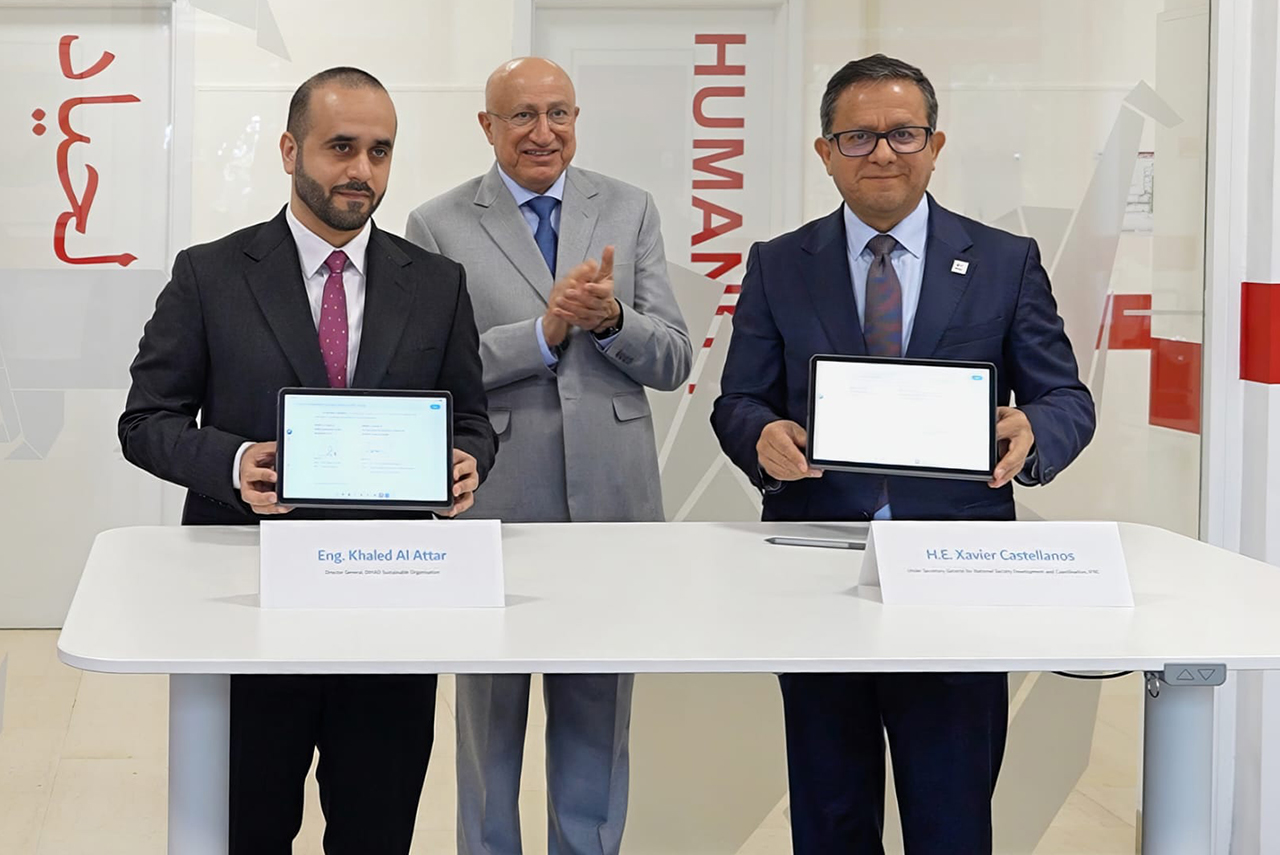
The DIHAD Sustainable Organisation signed an agreement with the International Federation of Red Cross and Red Crescent Societies (IFRC) to support the IFRC Limitless Youth Innovation Leadership Academy with a total contribution exceeding USD 100,000. This commitment reaffirms DIHAD’s role as an official partner of the Academy during the global launch of the “Peace” edition, which took place at the IFRC’s Solferino Academy in Rome.
The event brought together a distinguished group of representatives from national Red Cross and Red Crescent societies worldwide, highlighting a shared commitment to supporting youth-led innovation and strengthening community resilience amid increasing global challenges.
The IFRC Limitless Youth Innovation Leadership Academy is a global initiative whose efforts have reached more than 2,700,000 people, impacting 10,000 trained innovators through 2,200 supported projects, in 150 countries and 17 languages. This remarkable global footprint reflects the initiative’s expanding reach and its growing impact in advancing sustainable humanitarian innovation.
The DIHAD Sustainable Organisation aims to further support the Academy in strengthening innovation as a strategic tool for achieving sustainable humanitarian impact. This commitment aligns directly with the “Innovation for Humanity” pillar under the DIHAD 2044 Agenda, through targeted investment in youth-led innovation.
The initiative also reinforces the strategic shift in humanitarian action from reactive emergency response toward building long-term, sustainable resilience. Moreover, this partnership underscores the DIHAD Sustainable Organisation’s commitment to equipping the next generation of humanitarian leaders with the skills and capabilities needed to ensure the sustainability and evolution of humanitarian systems worldwide.
On the sidelines of the global launch of the “Peace” edition, the DIHAD Sustainable Organisation, in collaboration with the International Federation of Red Cross and Red Crescent Societies (IFRC), hosted a high-level roundtable discussion titled: “We Know Adaptation Is Necessary. Why Is It Still So Hard? Leadership, Innovation and Youth as Conditions for Impact”.
The round table brought together senior officials and international experts in humanitarian and development fields, alongside young innovators and active contributors in social and community sectors.
Eng. Khaled Al Attar, Director General of DIHAD Sustainable Organisation, emphasized the importance of investing in the next generation of humanitarian leaders and providing them with opportunities to translate their ideas into tangible, real-world impact. He added that supporting youth-led initiatives is integral to DIHAD’s strategic goal of shifting from immediate humanitarian response to implementing sustainable solutions, thereby strengthening communities’ capacity to adapt to evolving crises.
The meeting featured several prominent international speakers, including H.E. Mr. Xavier Castellanos Mosquera Under Secretary General for National Society Development and Coordination, The International Federation of Red Cross and Red Crescent Societies (IFRC), Mr. Amin Awad, President of the Foundation Council, DCAF Genève Center for Security Governance; Former United Nations Assistant Secretary-General and Crisis Coordinator for Ukraine; Senior Fellow, Advanced Leadership Initiative, Harvard University, Drs. Yannick du Pont, Member of the Development Cooperation Committee at the Dutch Advisory Council on International Affairs; Founder of Spark, Amsterdam; Michael A. Köhler, Grand Bargain Ambassador; Professor at the College of Europe, Bruges; Former Deputy Director-General, DG ECHO, and Henry Caceres (IFRC Limitless Lead), the session was facilitated by: Gintare Guzeciviute and Yeon Park (IFRC Solferino Academy staff), Discussions focused on the importance of continuous institutional adaptation and how leadership, organizational culture, and governance shape an organization’s ability to navigate complex and evolving challenges particularly in an increasingly fast-paced and changing global environment. The role of entrepreneurship and emerging leadership models in enhancing institutional adaptability was also highlighted, with an emphasis on the fact that engaging youth in developing local solutions is not merely an option, but a strategic imperative to ensure the sustainability of humanitarian action.


